When pregnancy takes longer than expected, you may find yourself facing a long, confusing list of tests and wondering: do I really need all of them?
Fertility tests help identify possible reasons why you have not become pregnant and guide treatment where needed. The process starts with a consultation to review your medical history and how long you have been trying. Your doctor then recommends the tests you need, one step at a time.
Although this article focuses on fertility tests for women, both partners should be assessed at the same time. A semen analysis is therefore usually included in the initial evaluation. (1)
When Should You Start Fertility Testing?
Fertility testing is generally recommended for both partners after 12 months of regular sex without contraception if the woman is under 35 and pregnancy has not occurred. (1)
An earlier assessment is recommended in the following situations: (1)
– Ages 35–39: After six months of trying.
– Age 40 or over: Seek advice promptly rather than waiting several months.
– At any age: Seek advice earlier if you have irregular periods, a history of problems affecting the uterus or fallopian tubes, pelvic infections, or previous pelvic or abdominal surgery. A known fertility problem in your partner also warrants an earlier assessment.
Avoid delaying an assessment unnecessarily, as age is one of the most important factors affecting female fertility.
Your Medical History and First Appointment
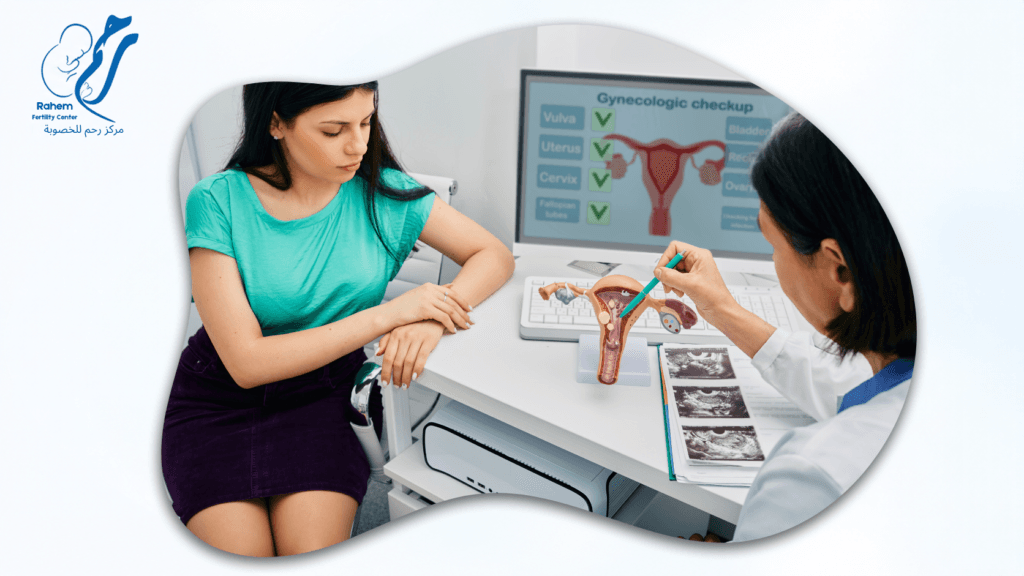
Before ordering tests, a gynecologist or fertility specialist will talk with you and your partner about your health and how long you have been trying to conceive. The discussion usually covers: (2)
- How often your periods occur and whether they are regular, which can provide useful information about ovulation.
- Painful periods or pain during sex: These symptoms may suggest conditions such as endometriosis.
- Your general health: Weight, long-term health conditions, medications, supplements, and smoking.
- Previous pregnancies and miscarriages, if any.
- Previous surgery and reproductive tract infections.
- A physical examination may also be recommended. This may include checking for signs of excess androgen hormones, such as acne or increased facial or body hair, and performing a pelvic examination where appropriate.
This information helps your doctor choose useful tests and avoid those that are unlikely to add anything to the assessment.
Fertility Tests for Women
1. Checking Whether Ovulation Is Occurring
Regular menstrual cycles lasting 21–35 days are a good sign that you are ovulating. If confirmation is needed, your doctor may request a progesterone blood test, usually taken about one week before your next period is expected.
This test can help confirm that ovulation has recently occurred. It does not measure egg quality, and a single result cannot fully assess hormone function after ovulation.
Home ovulation tests help predict when ovulation is likely to happen, but they do not confirm that an egg has actually been released. (1)(3)
You may still experience difficulty getting pregnant despite regular periods, because ovulation is only one part of fertility
2. Ovarian Reserve Testing
Ovarian Reserve tests help estimate your remaining egg supply indirectly.
The main tests are:
- An AMH blood test: Measures anti-Müllerian hormone.
- An antral follicle count: Uses ultrasound to count the small follicles in the ovaries.
Follicles are fluid-filled sacs that contain eggs. This is usually done with a transvaginal ultrasound, which provides a clearer view of the ovaries. An AMH test can usually be done on any day of your menstrual cycle, while the follicle count is generally performed near the beginning of the cycle.
A low ovarian reserve result does not mean natural pregnancy is impossible, and a high result does not guarantee pregnancy. These tests do not measure egg quality or give an exact count of the eggs remaining.
They cannot determine fertility on their own and must be interpreted alongside your age, medical history, and other test results. (4)
3. Hormone Blood Tests
Your doctor selects hormone tests based on your menstrual cycle and symptoms. Not everyone needs the same tests. They may include:(1)
- Hormones related to ovarian function: FSH, LH, and estradiol (E2). These may help investigate irregular or absent periods. Baseline FSH and estradiol levels are usually measured between days two and four of the cycle, although your doctor may recommend a different time depending on your circumstances.
- Prolactin: This hormone is particularly relevant if your periods are irregular or absent, or if you have a milky discharge from your nipples. It is not routinely required for every woman undergoing fertility testing.
- Thyroid-stimulating hormone (TSH): Helps assess thyroid function. Your doctor may request it based on your symptoms and medical history, particularly if there are signs of a thyroid condition.
- Additional tests: These may include androgen levels, such as testosterone, if polycystic ovary syndrome (PCOS) is suspected, and blood glucose testing where appropriate to assess blood sugar regulation.
4. Transvaginal Ultrasound
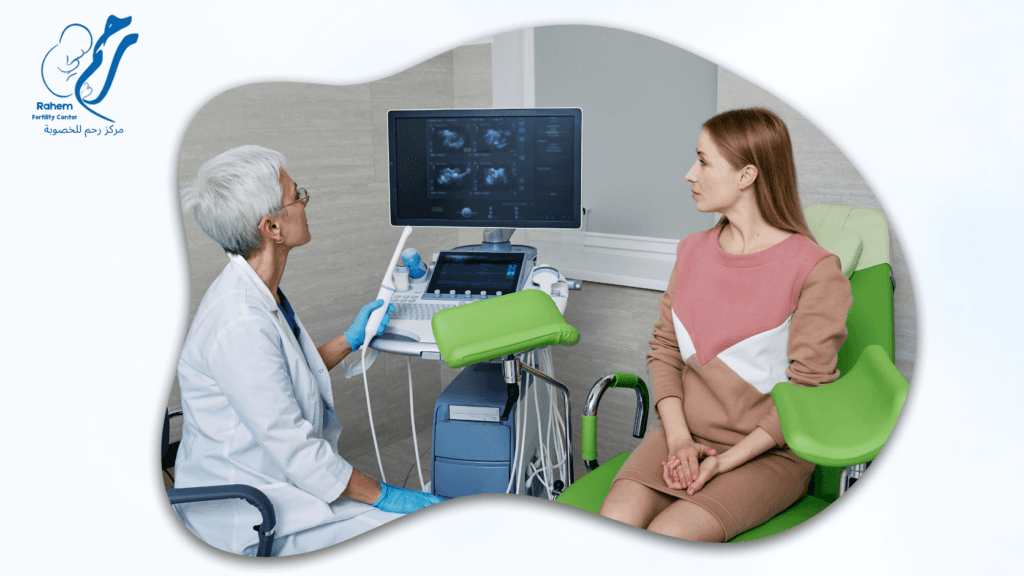
A transvaginal ultrasound helps assess the size and shape of the uterus, its lining, and the ovaries. It may reveal fibroids, ovarian cysts, or uterine polyps. It also allows the doctor to count the small ovarian follicles as part of ovarian reserve testing. A 3D ultrasound may be used to examine certain differences in the shape or structure of the uterus more closely. However, a standard ultrasound alone cannot confirm that both fallopian tubes are open. (1)
5. Assessing the Fallopian Tubes and Uterine Cavity
The egg and sperm need a clear route to meet, so checking the fallopian tubes is an important part of the assessment. Depending on your history and other findings, your doctor may recommend one or more of the following:(1) (4)
- Hysterosalpingography (HSG): A commonly used X-ray test performed after your period ends and before ovulation. Contrast dye is introduced into the uterus to show its cavity and check whether the dye passes through the fallopian tubes (helps identify blocked fallopian tubes).
- Hysterosalpingo-contrast sonography (HyCoSy): An alternative available at some centers. It uses ultrasound and a contrast agent to assess whether the fallopian tubes are open.
- Hysteroscopy: Uses a thin camera to look directly inside the uterus. It may be recommended if polyps, scar tissue, or a uterine septum a band of tissue dividing the uterine cavity are suspected, or to treat a problem already identified. It is not routinely recommended when other investigations are normal.
- Laparoscopy: A surgical procedure used to examine the pelvis. It is not a routine fertility test but may be suggested when there is a reason to investigate or treat a condition surgically, such as certain cases of endometriosis or pelvic adhesions.
Which Tests Are Not Routinely Needed?
The initial fertility assessment does not usually include tests for a tendency to form blood clots, extensive immune system testing, or broad genetic testing without a specific medical reason. Ordering these tests for everyone can add costs without providing information that helps explain the difficulty conceiving or changes the treatment plan. (1)
The Assessment Is Incomplete Without Your Partner
Difficulty conceiving may involve factors affecting either partner or both. Fertility specialists therefore recommend assessing both partners together rather than focusing on one person. A semen analysis is one of the key tests used to investigate why a couple has not become pregnant.(1)
Book a consultation at Rahem Center in person or online, to discuss possible reasons for difficulty conceiving and plan your next steps with a doctor.