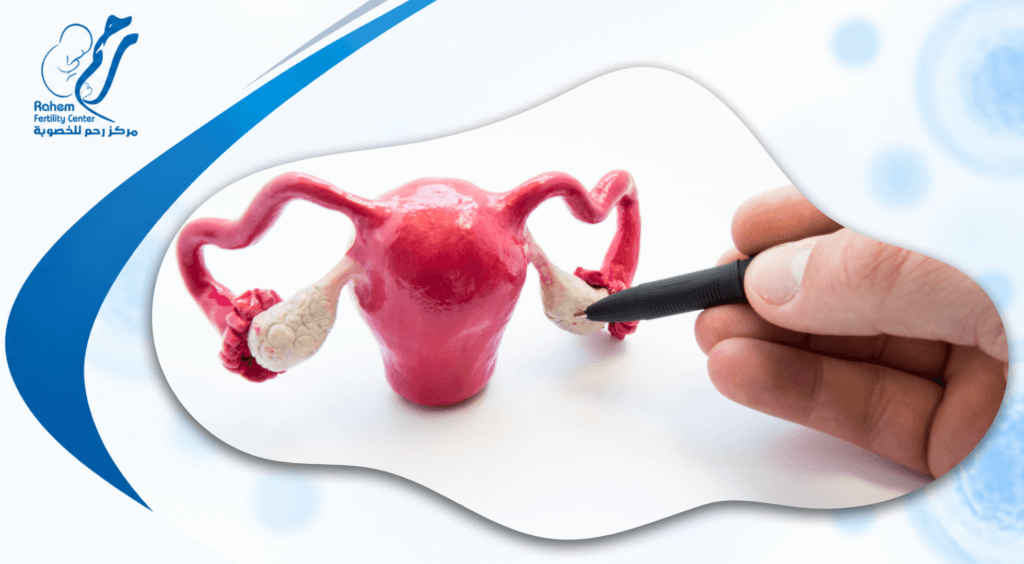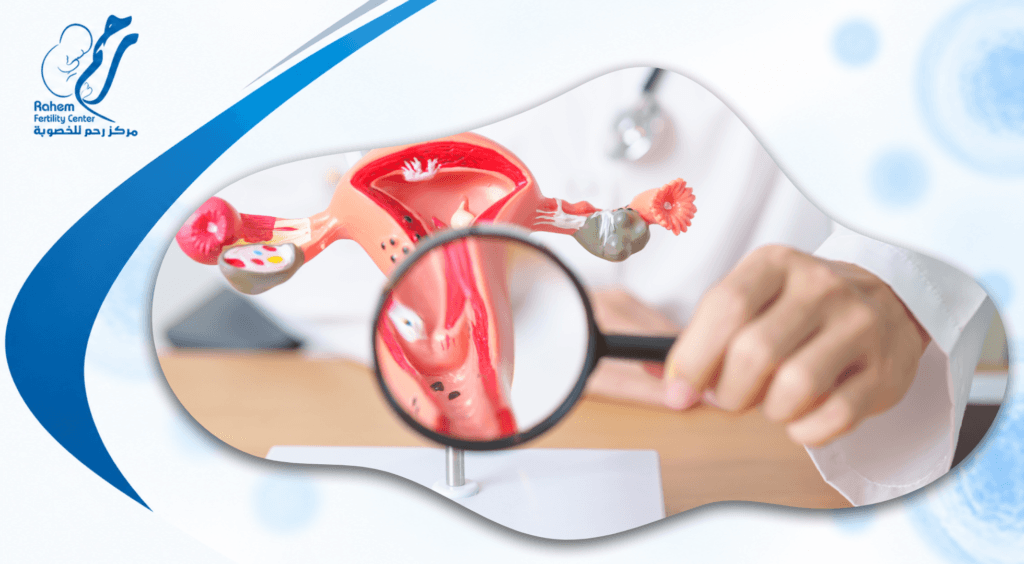
Congenital uterine abnormalities are differences in the shape or structure of the uterus that are present from birth. (1)
They occur when the female reproductive system does not develop in the usual way before birth. These abnormalities are relatively common, affecting around 5% of females. In many cases, they cause no symptoms and do not prevent a woman from becoming pregnant or having a normal pregnancy. (1)
In other cases, however, they may be associated with pregnancy-related complications such as recurrent miscarriage, preterm birth, and other problems. (1)
Types of Congenital Uterine Abnormalities
The most common types of congenital uterine abnormalities, listed from most to least common, are: (2)
This is the most common type, the uterus is formed as a single organ, but a wall of tissue, called a septum, divides the inside of the uterus into two sections.
A bicornuate uterus is often described as heart-shaped, the upper part of the uterus is divided into two horn-like sections rather than forming one completely unified uterine cavity. The main difference between a bicornuate uterus and a septate uterus is that, in a bicornuate uterus, the division involves the shape of the uterus itself rather than simply an internal septum.
3. Arcuate uterus:
Here there is a single uterine cavity with a small, shallow indentation at the top. This is considered a very mild variation. Some modern classification systems regard it as an anatomical variation close to normal rather than a true uterine abnormality.
4. Uterus didelphys:
Uterus didelphys occurs when two separate uteruses develop instead of one because the structures that normally join together to form the uterus do not fuse during fetal development. Each uterus usually has its own cervix, and in some cases there may also be a dividing wall, or septum, within the vagina.
5. Unicornuate uterus:
A unicornuate uterus develops when only one side of the uterus forms fully. As a result, the uterus is smaller than usual and has one main developed side rather than the two normally developed sides. A small, underdeveloped portion of uterine tissue may also be present on the opposite side.
6. Hypoplastic or aplastic uterus:
The uterus does not develop to its normal size and may remain small and underdeveloped. In some cases, it may fail to develop completely.
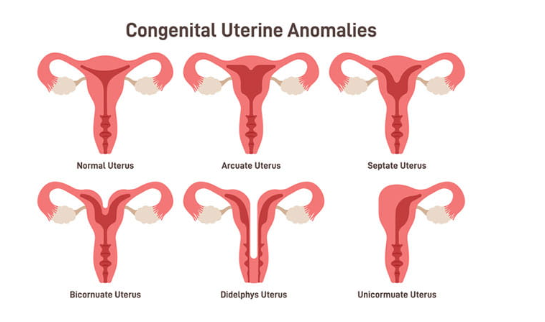
In simple terms, the main types can be distinguished by their structure: a septate uterus is a single uterus divided internally by a septum; in a bicornuate uterus, the upper part of the uterus itself is divided into two horns; and an arcuate uterus has no true division, only a slight indentation at the top of the uterine cavity.
How Can Congenital Uterine Abnormalities Affect Pregnancy?
Congenital uterine abnormalities do not cause pregnancy problems in every woman.
Many women are able to conceive, carry a pregnancy, and give birth normally. However, some types may increase the risk of: (1)
- Miscarriage
- Preterm birth
- Cervical insufficiency
- Preeclampsia
- Fetal growth restriction
- Abnormal fetal position before delivery.
The level of risk depends on the type and severity of the uterine abnormality. Regular prenatal care can help identify potential complications early and ensure they are managed appropriately when needed.
Diagnosing Congenital Uterine Abnormalities
Most women are unaware that they have a congenital uterine abnormality because these conditions often cause no obvious symptoms. They may be discovered incidentally during tests to investigate infertility or recurrent miscarriage, or for the first time during pregnancy on routine ultrasound scans. Three-dimensional transvaginal ultrasound is particularly useful because it provides a detailed view of both the uterine cavity and the overall shape of the uterus. In general, diagnosis is made using one or more imaging or diagnostic tests, including: (2)
- Three-dimensional transvaginal ultrasound (3D US).
- Magnetic resonance imaging (MRI)
- Hysterosalpingography (HSG)
- Hysteroscopy.
Congenital uterine abnormalities may sometimes occur alongside congenital kidney or urinary tract abnormalities, thus the doctor may also recommend imaging of the kidneys and urinary system after the diagnosis is confirmed
Treatment of Congenital Uterine Abnormalities
Not every congenital uterine abnormality requires treatment. In many cases, differences in the shape of the uterus cause no symptoms or health problems. The decision to treat, and the type of treatment recommended, depends mainly on three factors: the type of abnormality, its severity, and whether symptoms such as pain are present, as well as the woman’s pregnancy history, including previous recurrent miscarriages or preterm births.
Treatment options may include: (1)
- Observation only: Mild abnormalities that do not cause symptoms or complications may not require any treatment.
- Hysteroscopic surgery: Considered in selected cases of a septate uterus. The septum can be divided or removed using hysteroscopy. The procedure may be considered particularly for women who have experienced recurrent miscarriage, as it may help reduce the risk of future miscarriage. However, for women whose only concern is infertility, the evidence that surgery improves the chances of pregnancy remains inconclusive. The decision is therefore made on an individual basis after discussion with the doctor.
- Closer monitoring during pregnancy: Surgery is generally not recommended to correct most other types of congenital uterine abnormalities, such as a unicornuate uterus, uterus didelphys, or bicornuate uterus. In these cases, management usually focuses on careful monitoring throughout pregnancy because of the potential risk of complications such as miscarriage and preterm birth.