The number of women choosing to freeze their eggs has increased noticeably in recent years. The reasons vary and may include a medical condition, delayed marriage, a personal decision to postpone marriage or childbearing, or financial pressures and the rising cost of living. So, what should you know about egg freezing?
Key Facts About Egg Freezing
Egg freezing is a medical procedure used to preserve a woman’s fertility by collecting healthy eggs, freezing them, and storing them for possible use in future fertility treatment. (1)
The most important points to know include: (1)
- The best time to freeze eggs is generally before the age of 37, because egg number and quality are usually higher at a younger age, which may improve the chances of a successful pregnancy later.
- Doctors often aim to collect around 15-20 eggs or more to improve the likelihood of achieving a successful future pregnancy.
- The process begins with prescribed fertility medications that stimulate the ovaries to produce several mature eggs. The eggs are then collected during a short procedure known as egg retrieval, which usually takes about 15-20 minutes. After retrieval, the eggs are frozen using advanced techniques designed to preserve them and reduce the risk of damage.
- When the woman later decides that the time is right to try for pregnancy, the frozen eggs are carefully thawed and fertilised with sperm from her husband through in vitro fertilisation (IVF).
How Is Egg Freezing Performed?
The egg-freezing process, including preparation, usually takes around two weeks. It begins with ovarian stimulation injections and ends with egg retrieval and freezing. The exact duration may be shorter or longer depending on the treatment protocol and the woman’s individual response.
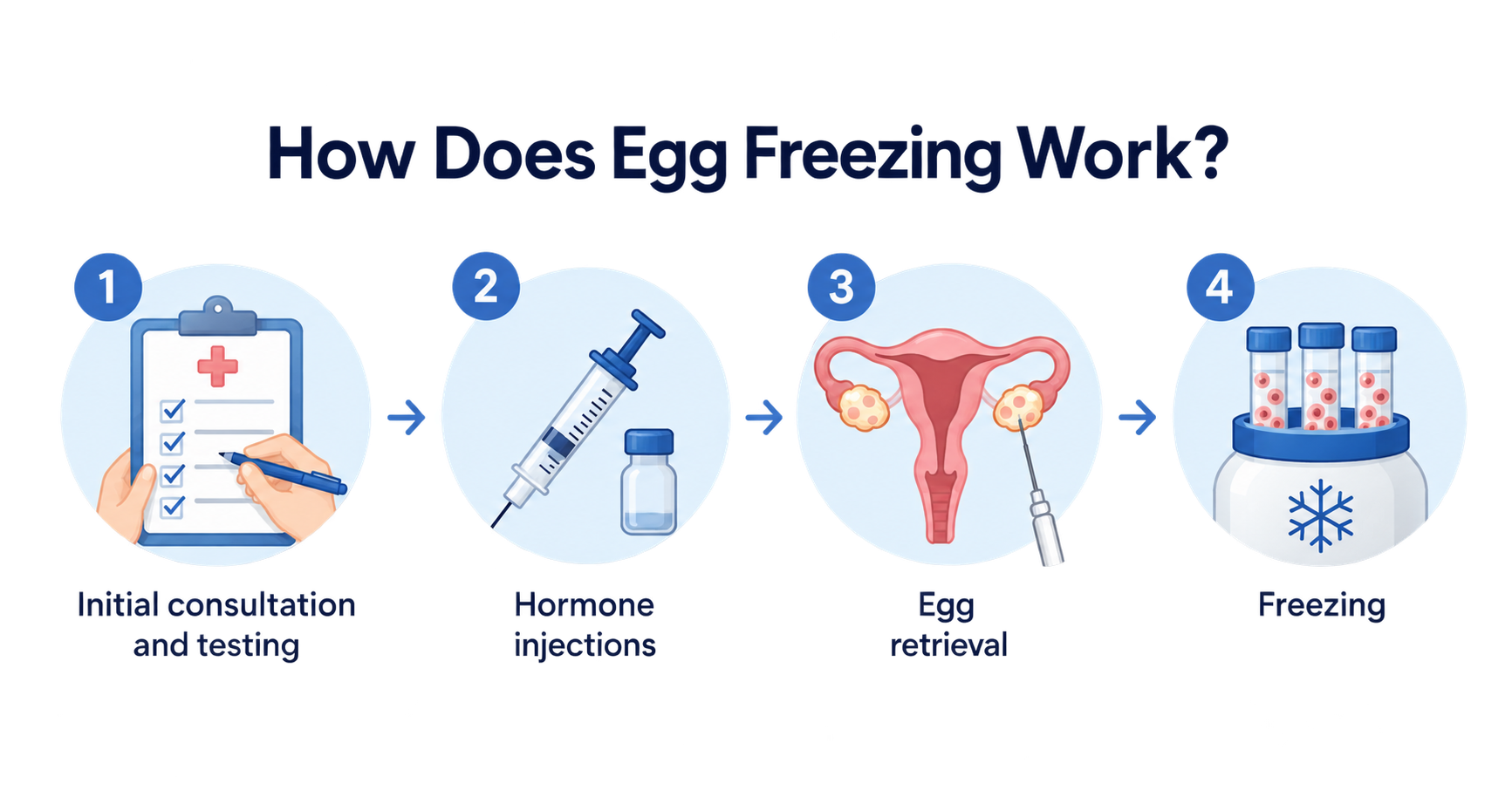
The process generally includes the following steps: (2)
- Blood and Hormonal tests are carried out to assess ovarian reserve and hormone levels, helping the doctor select the most appropriate stimulation protocol.
- Fertility medications and injections are taken for approximately 10-14 days to stimulate the ovaries to mature several eggs instead of the single egg usually produced during a natural menstrual cycle.
- Monitoring egg development; The growth of the ovarian follicles is monitored through repeated ultrasound scans and hormone blood tests during the stimulation period.
- Trigger injection; Once the follicles reach the appropriate size, the doctor will advise when to take the trigger injection. Depending on the medication used, it may be given under the skin or into a muscle.Egg retrieval is then scheduled approximately 34-36 hours later.
- Egg retrieval; The procedure is usually performed under light sedation and takes around 15-20 minutes. In married women, the eggs are commonly collected through the vagina using a fine, ultrasound-guided needle. For unmarried women, the doctor may use a transabdominal approach with a fine needle when appropriate.
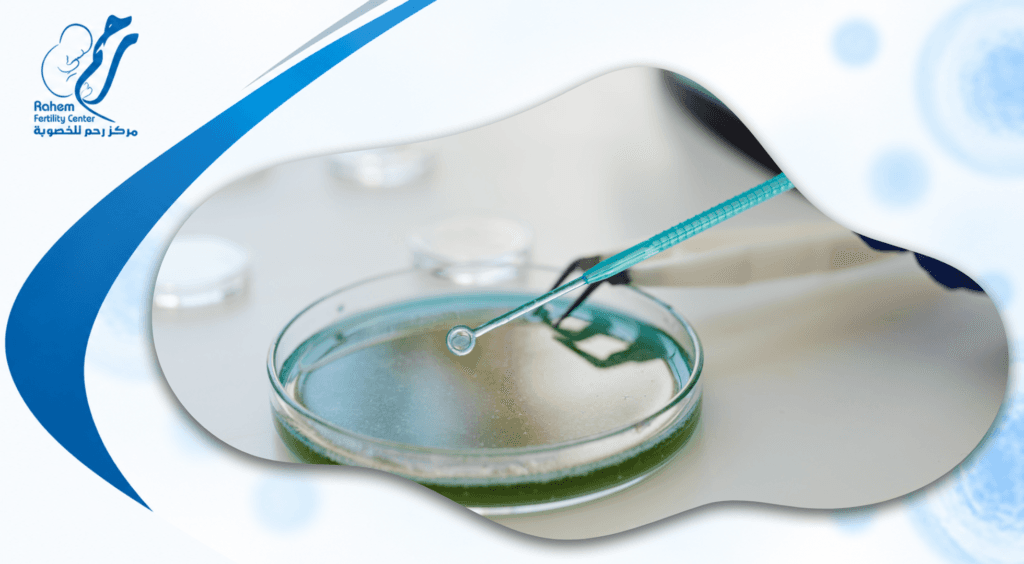
- Egg freezing; The retrieved eggs are assessed in the laboratory, and suitable mature eggs are rapidly frozen and stored.
- Using these eggs in the future; When pregnancy is desired, the frozen eggs are thawed and fertilised in the laboratory with the husband’s sperm using in vitro fertilisation (IVF). The resulting embryo is then transferred into the uterus.
What Is the Best Age to Freeze Your Eggs?
In general freezing eggs before age 37 offers a better chance of future pregnancy because egg quantity and quality decline with age. Success rates become lower after 40, and egg freezing after 42 is not usually recommended for most women, although individual assessment remains necessary for each individual case. (1)
Who Should Consider Egg Freezing?
After appropriate medical assessment, egg freezing may be recommended in the following situations: (1)
- Women who wish to have children in the future but expect to delay marriage or pregnancy for personal or social reasons.
- Women preparing to undergo treatments that may affect fertility, such as chemotherapy or radiotherapy.
- Women with medical conditions that may reduce fertility, such as severe endometriosis or autoimmune diseases requiring treatments that could affect ovarian function.
- Women who are expected to undergo surgery to remove an ovary.
- Women with a family history of early menopause or diminished ovarian reserve.
- Women with genetic conditions associated with premature ovarian insufficiency.
What Is the Chance of Pregnancy After Egg Freezing?
The chances of a successful pregnancy after egg freezing depend mainly on your age at the time the eggs are collected and the number of eggs frozen.
The younger you are, the better the expected egg quality and the higher the chance of a successful pregnancy in the future. In general, for women under the age of 35, freezing around 12 eggs may provide an estimated 40-50% chance of achieving a successful pregnancy. (3)
Freezing 20 eggs may increase this chance to approximately 75-80%. However, these figures are estimates and may vary from one woman to another depending on egg quality, overall health, and other fertility-related factors. (3)