Embryo transfer is one of the most anticipated stages of IVF and ICSI treatment. During this step, embryos created in the laboratory are placed inside the uterus, where one may implant and lead to pregnancy. (1)
Although the procedure itself is usually simple and does not take long, the days that follow can feel much longer. This is the waiting period before the pregnancy test, which typically lasts around 11-14 days, depending on the timing of the embryo transfer and the fertility clinic’s instructions. (2)
During this time, many questions come up: Do you need to rest after embryo transfer? Which symptoms are normal? Can you move around and work as usual? Which medications and instructions should you follow? In this article, we explain how embryo transfer is performed, what happens afterwards.
How Is an Embryo Transfer Performed?
Embryo transfer is a simple, quick procedure that usually does not require anesthesia.
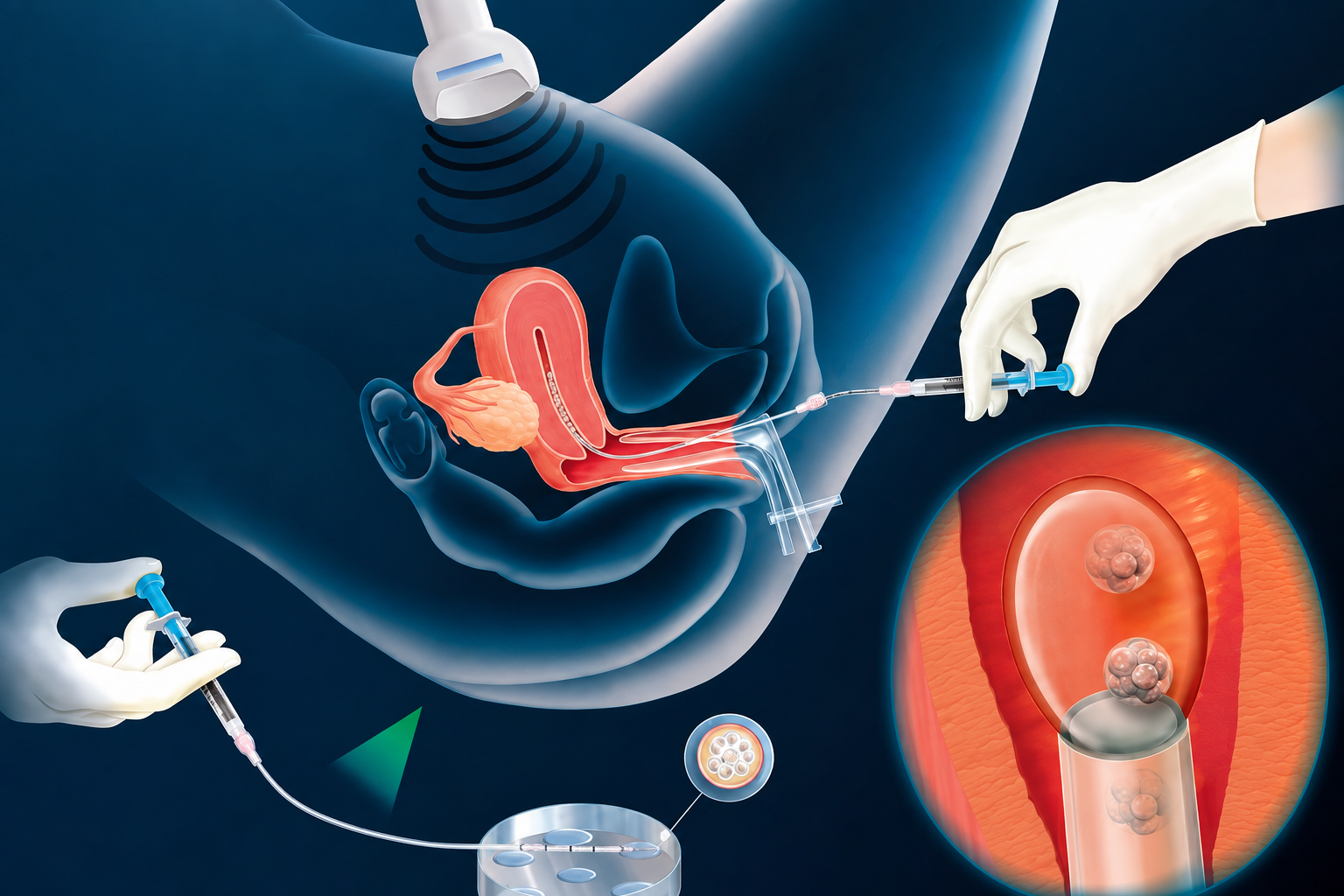
It is typically performed in the following steps: (3)(4)
- The doctor inserts a speculum into the vagina to access the cervix.
- The selected embryo or embryos are placed into a thin, flexible catheter containing a small amount of special fluid used to support the embryos.
- The catheter is gently passed through the cervix and into the uterine cavity, usually under ultrasound guidance.
- The embryo is then released into the appropriate area of the uterus, and the catheter is carefully removed.
The transfer itself usually takes only a few minutes and is generally painless, although some women may experience mild discomfort or cramping. After the procedure, prolonged bed rest is usually unnecessary, and most women can return to light daily activities according to their doctor’s advice. (5)
How to prepare?
Embryo transfer usually doesn’t require any complicated preparations. Still, it’s really important to follow the specific instructions your fertility clinic gives you.
Some key points to keep in mind: (6)
- Take any prescribed medications exactly on time.
- Don’t stop any of them, especially hormone support meds like progesterone without checking with your doctor first.
- You might be asked to come in with a partially full bladder.
- This helps the doctor get a clear view of your uterus on the ultrasound.
- Stick to the clinic’s instructions on how much water to drink and when to drink it, and avoid emptying your bladder until the transfer is done if they tell you to.
- Right after the procedure, you can go to the bathroom.
How many embryos will be transferred?
The number varies from one case to the next. It depends on factors like your age, the quality and development stage of the embryos, and how previous IVF cycles have gone.
These days, many clinics prefer to transfer just one embryo especially for younger women or when there’s a high-quality embryo available.
The reason is that transferring more than one raises the chance of twins or more, which comes with added risks for both the mother and the babies.
The American Society for Reproductive Medicine also recommends transferring one chromosomally normal (euploid) embryo when it’s available, regardless of the woman’s age. (3)
That said, your doctor might suggest transferring more than one in certain situations like if you’re older or have had previous failed attempts but only after carefully weighing the odds of success against the risks of a multiple pregnancy.(3)
As for any good-quality embryos left over, they can be frozen (embryo freezing). That way, you can use them in a later cycle if this one doesn’t work, or save them for another pregnancy down the line without having to go through ovarian stimulation and egg retrieval all over again. (4)
What Happens After Embryo Transfer?
Once the transfer is done, you can usually leave the clinic within a short time and go back to your normal daily routine. There’s no need to stay in bed or take complete rest.
The evidence doesn’t actually show that resting after a transfer improves your chances of pregnancy.
In the days that follow, here’s what’s generally recommended: (8)
- Keep taking any prescribed medications, especially progesterone or other hormone treatments.
- Don’t stop them even if you have some light bleeding, unless your doctor specifically tells you to.
- You’re fine to walk around, move about, and do your usual day-to-day activities just to avoid intense workouts or heavy physical exertion during this time.
- You might notice some mild cramping, bloating, or a little spotting or brownish discharge. Just keep in mind that these symptoms on their own don’t tell you whether the transfer worked or not.
- Don’t take a pregnancy test early, wait for the date your clinic gave you, which is usually around 10 to 14 days after the transfer, depending on the embryo’s age and the clinic’s specific protocol.
- Contact your doctor if you experience heavy bleeding, severe or ongoing abdominal pain, a fever, or if you just feel generally unwell.
If your pregnancy test comes back positive, they’ll typically schedule an early ultrasound around the 7-week mark to confirm the pregnancy is in the right place and developing as it should.
References
- Oversight of Assisted Reproductive Technology – ASRM
- IVF – NHS
- Guidance on the limits to the number of embryos to transfer: a committee opinion – ASRM
- Step 5: Embryo transfer to the womb – NHS
- IVF and ICSI – information for patients having treatment – NHS
- Embryo Transfer – Emory University School of Medicine
- Decisions to make about your embryos – HFEA
- Fertility – Egg /Embryo procedures and transfer – NHS