Miscarriage refers to loss of a pregnancy in the first trimester, the majority of miscarriage symptoms occur before the pregnancy is 10 weeks gestation.
Miscarriage is more common than you think, it is estimated that around 10-20% of confirmed pregnancies will have an early miscarriage.
and the actual percentage may be even higher, as many miscarriages happen in the first or second week of pregnancy before a woman even knows she is pregnant. Let us take a closer look at the symptoms of early miscarriage in the first weeks of pregnancy. (1)
Miscarriage Symptoms in the first weeks
Miscarriage symptoms in the first weeks of pregnancy may not always be clear, as they can be similar to period symptoms or early pregnancy symptoms. However, there are some signs that may suggest a possible early miscarriage, especially if they are severe or occur together.
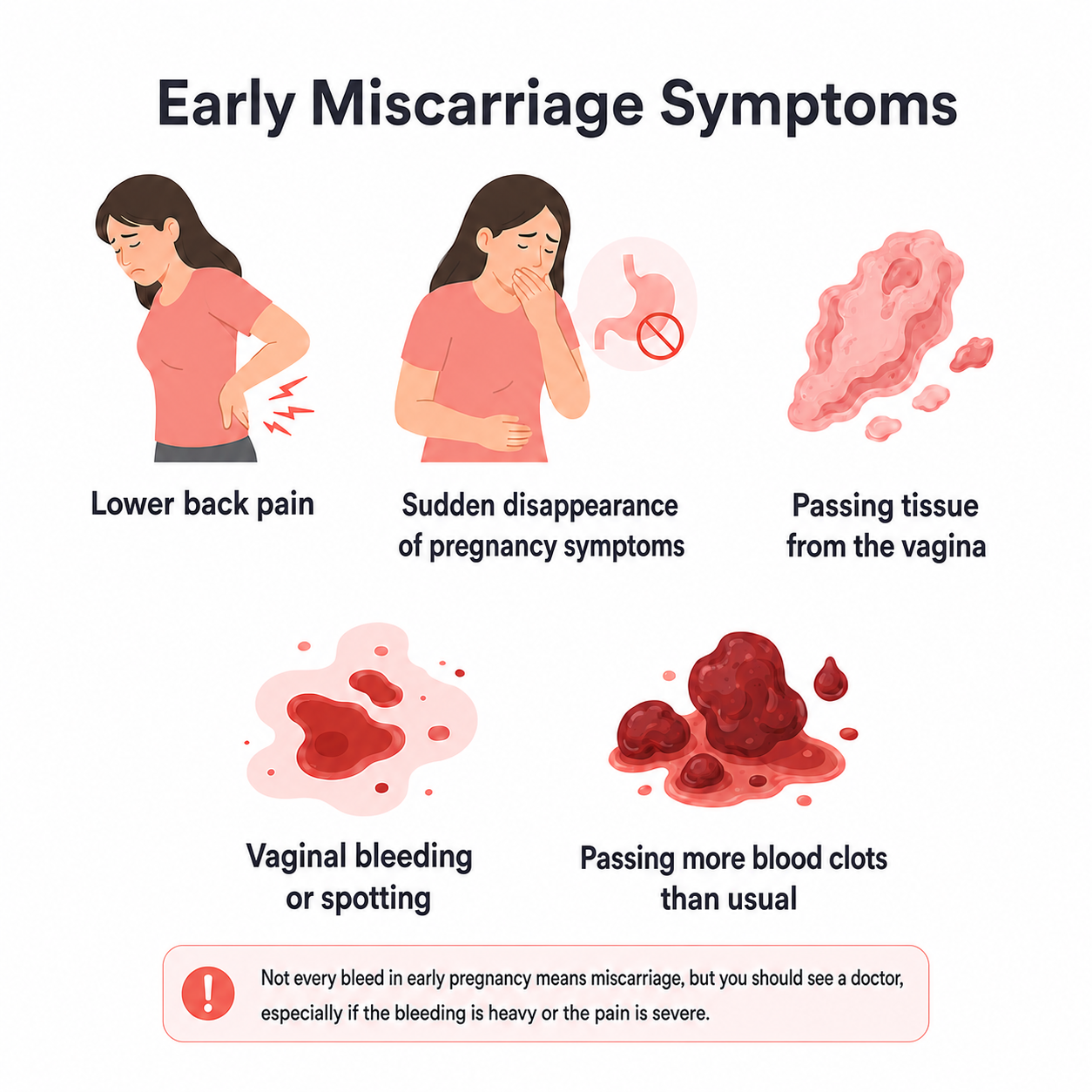
The most common miscarriage symptoms in the first week include: (2)(3)
- Heavy vaginal bleeding: Heavy bleeding, especially if it is accompanied by blood clots or tissue passing from the vagina, may be a sign of miscarriage. However, spotting, light bleeding, or brown discharge can happen normally in early pregnancy and do not always mean there is a problem. Still, it is best to inform your doctor, especially if the bleeding happens repeatedly or is accompanied by pain.
- Severe cramps and lower abdominal pain: Strong cramps or severe abdominal pain may indicate a miscarriage, especially when accompanied by bleeding.
- Mild cramps, however, are often normal in early pregnancy.
- Back pain.
- Passing clots or tissue from the vagina: This is one of the stronger signs of miscarriage and requires immediate medical attention.
- A sudden disappearance of pregnancy symptoms: This may include nausea, fatigue, or breast tenderness suddenly going away. This can happen in some cases of miscarriage, but it is not enough on its own to confirm it.
- A sudden flow of fluid or watery discharge from the vagina.
Symptoms alone are not enough to confirm a miscarriage, therefore, you should see a doctor if you have heavy bleeding, severe pain, or tissue passing from the vagina, in order to do the necessary tests to check on pregnancy health.
Does bleeding in the first week indicate miscarriage?
No. Bleeding in the first week of pregnancy does not necessarily mean that a miscarriage has taken place. Spotting is common in early pregnancy and may happen for harmless reasons, such as implantation of the fertilized egg in the uterine lining or changes in the cervix.
What matters is the nature of the bleeding. If the bleeding is heavy, lasts for several days, is accompanied by clots, severe pain in the lower abdomen or back, dizziness, or fainting, it may be a sign of a problem that needs prompt medical evaluation, such as miscarriage or ectopic pregnancy. For this reason, the cause of bleeding cannot be determined based on symptoms alone. You should see a doctor for an examination, ultrasound, and pregnancy hormone test when needed. (4)
What is the risk of miscarriage by week of pregnancy?
The risk of miscarriage decreases with each week of pregnancy. As mentioned earlier, the risk of miscarriage is around 10-20% during the first three months of pregnancy, and it drops to about 1-5% between weeks 13 and 19 of pregnancy (These are general estimates and may vary depending on age and other risk factors). (5)
Treatment of early miscarriage
When miscarriage symptoms occur, medical evaluation is required to confirm the diagnosis and determine the appropriate treatment.
Once a miscarriage has begun, treatment focuses on managing it safely, ensuring that all pregnancy tissue has passed, and preventing complications such as heavy bleeding or infection.
Your doctor will decide how to manage the miscarriage based on its type and your condition. In some cases, monitoring may be enough, while in others the doctor may prescribe medication to help empty the uterus, or perform a medical procedure to clear the uterus if needed. (2)(5)
It is not your fault!
Miscarriage often happens spontaneously and is not caused by something you did, something you failed to do, or something you could have prevented. The most common cause of early miscarriage is random chromosomal abnormalities in the embryo. (3)
Around 80% of miscarriages happen during the first months of pregnancy, and most miscarriages will happen only once. Many women are able to become pregnant again and have a healthy baby in a future pregnancy. (5)
However, if miscarriage happens more than once, it is important not to ignore it. Recurrent miscarriage needs medical evaluation to identify the possible cause. This may include checking the uterus, hormones, chromosomes, or other factors that may affect the continuation of pregnancy.
Are you experiencing recurrent miscarriage, or would you like to evaluate your condition before your next pregnancy? You can book an in-person or online consultation at Rahem Fertility Center, where care is provided according to the highest international standards to give patients an accurate diagnosis and a clear treatment plan.
References
- Mayoclinic – Miscarriage
- American Pregnancy Association – Symptoms & Signs of Miscarriage
- Medlineplus – Miscarriage
- UCDavis – What are the signs of early miscarriage?
- Cleveland Clinic Miscarriage